


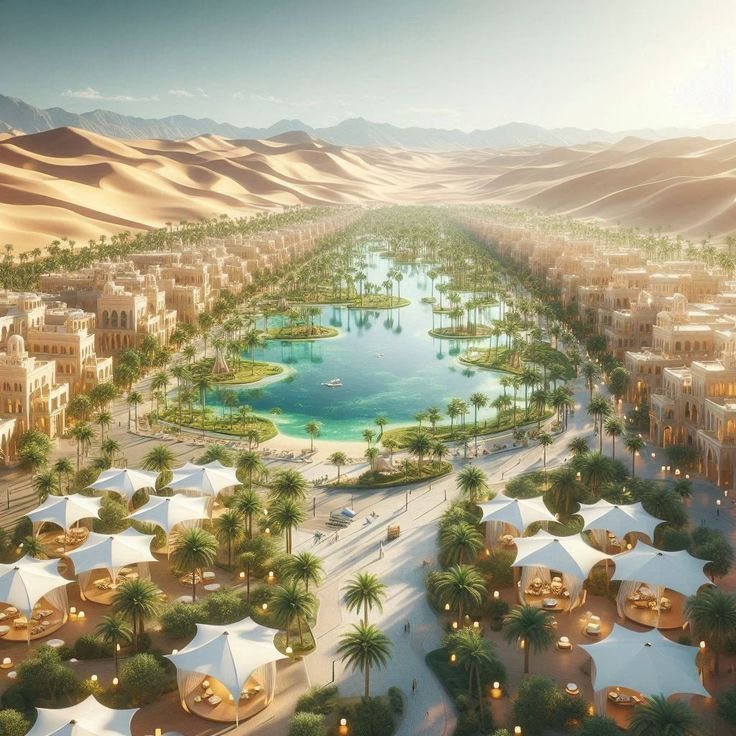
Wüste nicht mehr
Die Umwandlung trockener Wüsten in ökologisch nachhaltige Lebensräume für Mensch, Pflanze und Tier.
Umwandlung arider Wüsten in ökologisch nachhaltige Lebensräume
Die Umwandlung arider Wüsten in ökologisch nachhaltige Lebensräume erfordert einen vielschichtigen Ansatz, der die Bedürfnisse von Mensch, Pflanze und Tier in Einklang bringt. Hier sind einige wichtige Strategien, um diese Transformation zu erreichen:
1. Wassermanagement
Regenwassernutzung: Das Sammeln und Speichern von Regenwasser zur Unterstützung der Vegetation und zur Deckung des menschlichen Bedarfs.
Tropfbewässerung: Einsatz effizienter Bewässerungssysteme zur Minimierung des Wasserverbrauchs in der Landwirtschaft.
Entsalzung: Nutzung von Technologie zur Umwandlung von Meerwasser in Süßwasser für Bewässerung und Trinkwasser.
2. Bodensanierung
Bodenanreicherung: Zugabe von organischem Material und Nährstoffen zur Verbesserung der Bodenfruchtbarkeit und -struktur.
Konturlandwirtschaft: Anwendung von Geländekonturierungstechniken zur Reduzierung der Erosion und zur Erhaltung der Bodenfeuchtigkeit.
Zwischenfrüchte: Anbau von Zwischenfrüchten zur Verhinderung von Bodendegradation und zur Förderung der Artenvielfalt.
3. Wiederaufforstung mit einheimischen Pflanzen
Anpflanzung dürreresistenter Arten: Auswahl einheimischer Pflanzen, die weniger Wasser benötigen und an die örtlichen Gegebenheiten angepasst sind.
Schaffung grüner Korridore: Anlage von Vegetationspfaden zur Verbindung von Lebensräumen und zur Unterstützung der Wildtierwanderung.
Bürgerbeteiligung: Einbindung der lokalen Bevölkerung in die Anpflanzung und Pflege einheimischer Pflanzen.
4. Nachhaltige Landwirtschaft
Permakulturpraktiken: Gestaltung landwirtschaftlicher Systeme, die natürliche Ökosysteme nachahmen, um Widerstandsfähigkeit und Produktivität zu gewährleisten.
Fruchtwechsel: Der Anbau wechselnder Nutzpflanzen dient der Verbesserung der Bodengesundheit und der Reduzierung von Schädlingsproblemen.
Agroforstwirtschaft: Die Integration von Bäumen und Sträuchern in Agrarlandschaften zur Verbesserung der Biodiversität und der Bodengesundheit.
5. Wildtierschutz
Lebensraumschutz: Erhaltung bestehender natürlicher Lebensräume zur Unterstützung der heimischen Tierwelt.
Wildtierkorridore: Schaffung sicherer Wege für Tiere, um sich zwischen fragmentierten Lebensräumen zu bewegen.
Monitoring und Forschung: Durchführung von Studien, um die Bedürfnisse der einheimischen Arten zu verstehen und Schutzstrategien anzupassen.
6. Bürgerbeteiligung und Bildung
Sensibilisierungsprogramme: Aufklärung der Bevölkerung über nachhaltige Praktiken und die Bedeutung der biologischen Vielfalt.
Lokale Führung: Lokale Führungskräfte befähigen, sich für Initiativen zur nachhaltigen Entwicklung einzusetzen.
Kooperative Projekte: Förderung von Partnerschaften zwischen Regierungen, Nichtregierungsorganisationen und der lokalen Bevölkerung zur Umsetzung nachhaltiger Praktiken.
Abschluss
Die Umwandlung arider Wüsten in ökologisch nachhaltige Lebensräume ist ein komplexes, aber erreichbares Ziel. Durch die Umsetzung dieser Strategien können wir Umgebungen schaffen, die das Leben von Mensch, Pflanze und Tier ermöglichen und gleichzeitig das ökologische Gleichgewicht und die Nachhaltigkeit fördern.


In der Masse liegt die Macht
Programs
Locations
Volunteers


